EduCollective is an open map where the knowledge of the world meets every school that needs it.
Offer
Education
Bring what you know into classrooms. Schools search the map to find people like you.
Find
Education
Bring the world into your classroom. Search a free, public map of people in person or online.
Build
Together
Bring people together in an Action Group, to develop educational activities or create learning materials.
Offer Education
Bring what you know into classrooms. Schools search the map to find people like you.
Find Education
Bring the world into your classroom. Search a free, public map of people in person or online.
Build Together
Bring people together in an Action Group, to develop educational activities or create learning materials.
Decentralize education for a sustainable and fair world.
We build open infrastructure that brings the knowledge of the world into every classroom, across borders, languages, and disciplines.
Diverse and future-proof educational landscapes.
A world where every person’s knowledge can reach a classroom, and every classroom can reach the world.
Actors offer activities, schools post their needs, and both find each other directly on the EduCollective platform.
A public map of actors, groups, and schools. Open to all, no login needed.
See every actor and group that can reach your school. Each one sets its own travel range.
Search by name, topic, skill, or place. Results refine as you type.
Actors list what they offer and schools post what they need, as clear, structured entries.
Actors, schools, and groups pick their mode: in person, fully online, or both.
Start or join a collective that builds educational projects together, on site or online.
Message actors, schools, and groups directly, one to one or in a group chat.
(Coming Soon) Schools and actors are paired by shared topics, age groups, and reach.
Reviews, reliability and reports come from the people who meet, guided by our Value Compass.
Schools post Slots, actors share their time. Bookings land on both calendars.
(Coming Soon) Native iOS and Android apps, with push notifications on your lock screen.
100% free and open to everyone, community built, with no paywalls, ever.
One center controls knowledge flow - rigid, slow to adapt
Many equal nodes - resilient, locally rooted, open to all
Adapting education to the challenges of our time.
Climate breakdown. Technology accelerating past us. Widening inequalities. We cannot solve problems with the same mindset that created them. And a mindset is not born - it is taught. Many of today's educational frameworks were built by the very systems that produced these crises - we cannot rely on them to provide the solutions. These crises move faster than any central curriculum can follow, striking differently in every region they touch. Moving from the Holocene into the Anthropocene, our world urgently needs a new generation of critical thinkers and problem solvers.
The understanding this moment demands already exists. It is carried by the people who face these challenges every day: researching, building, restoring, teaching. No single institution holds it - it is scattered across countless minds, places, and ways of life. What is missing is not the knowledge, but its way into the classroom. Education must become as decentralized as the challenges it answers, rooted not in belief but in the objective world we all depend on.
EduCollective is the open infrastructure between the people who hold the knowledge and the schools that need it: free, and belonging to no one but everyone who takes part. Anyone can bring what they know straight into a classroom, across borders, languages, and disciplines. The education these times call for cannot be handed down from above. It can only be built together, and this is a place to begin.
Decentralizing the power over human development.
A thriving democracy depends on educated and independent minds. Yet today our worldview is formed less by lived experience than by streams of information, filtered through screens, sorted by algorithms, and tuned by a handful of institutions and tech giants. Never before have so few shaped what so many see - and with it what we believe, how we behave, and how we vote.
Many countries show how centrally run schools and media can be used to steer belief and quiet dissent. A democracy needs the opposite: people who question dominant narratives, weigh information for themselves, and learn from a genuine plurality of voices rather than a curated few. Any centralized system can be captured, and whoever captures the place where a nation learns holds its future, free to steer a whole generation toward their own ends. Decentralized education has no center to capture. Where many voices stand side by side, questioning becomes part of everyday life, not an act of courage.
EduCollective is what that looks like in practice: instead of one curriculum written in one place, thousands of people offer what they know, and schools choose freely among them. No gatekeepers: every voice can appear, and no algorithm decides which of them reaches a classroom. Understanding is shaped collectively rather than dictated from above. A society's intelligence is the sum of all its minds. Its education should be too.
Making education as diverse as the people it serves.
Education is how new worlds begin. Right now it is mostly where the existing world reproduces itself. For centuries, education has pushed students into standardized molds, rewarding conformity over individuality and reducing success to a narrow set of outcomes. This is not an accident - it is the logic of centralization: one curriculum for millions can only work if the millions are treated as one. But people are not one. We are shaped by countless cultures, traditions, and histories; we learn in different ways, at different paces, toward different lives. But on a single scale, difference can only look like failure.
At a time of ecological crisis, centralization of wealth & power, and democracies under strain, what we need most are alternatives to failing systems - and alternatives are the one thing sameness cannot produce. A monoculture is efficient until the conditions change. Alternatives grow where difference is treated as a strength: where a scientist, an artist, a gardener, and an elder are all teachers, and teaching is how new worlds begin; where learning returns to hands, senses, places, and real encounters, the counterweight to a childhood lived through screens. Not a system - an ecosystem.
EduCollective is the soil where that ecosystem can grow. It makes room for every kind of contributor and every pressing topic, holding that no one's knowledge is too small, too local, or too niche to matter. This is not everyone retreating into their own truth - it is one shared world, understood together and lived in countless ways: unity, not uniformity. A meaningful life cannot be reduced to a single model of success - and the future of education should be as diverse as the people it serves.
Connecting knowledge to the schools that need it.
Few people shape the future more directly than teachers. Yet we ask them to carry it almost alone. Centralized schooling concentrates the entire task of education in a single profession. Every teacher who leaves makes the work harder for the ones who stay. A shortage that feeds itself.
The problem is not only that there are not enough teachers. It is that we made "teacher" the only way in. A nurse, a carpenter, a biologist, a farmer can spend a lifetime knowing something worth teaching and never spend an hour in a classroom. Beyond every school gate lies a wealth of knowledge: local experts, nature stewards, practitioners, elders, visionaries. A decentralized educational culture invites them in, surrounding teachers instead of leaving them alone at the center - not to replace them, but to stand beside them. The people who can lighten the load are already there, in every community.
EduCollective makes that circle visible. Its open map shows any school the people and local Action Groups around it, easy to find and free to contact. A teacher stops being the only source in the room and becomes the person who opens the door. The future is no longer something one profession carries alone. Now every school gate can open both ways.
One center controls knowledge flow - rigid, slow to adapt
Many equal nodes - resilient, locally rooted, open to all
Adapting education to the challenges of our time.
Climate breakdown. Technology accelerating past us. Widening inequalities. We cannot solve problems with the same mindset that created them. And a mindset is not born - it is taught. Many of today's educational frameworks were built by the very systems that produced these crises - we cannot rely on them to provide the solutions. These crises move faster than any central curriculum can follow, striking differently in every region they touch. Moving from the Holocene into the Anthropocene, our world urgently needs a new generation of critical thinkers and problem solvers.
The understanding this moment demands already exists. It is carried by the people who face these challenges every day: researching, building, restoring, teaching. No single institution holds it - it is scattered across countless minds, places, and ways of life. What is missing is not the knowledge, but its way into the classroom. Education must become as decentralized as the challenges it answers, rooted not in belief but in the objective world we all depend on.
EduCollective is the open infrastructure between the people who hold the knowledge and the schools that need it: free, and belonging to no one but everyone who takes part. Anyone can bring what they know straight into a classroom, across borders, languages, and disciplines. The education these times call for cannot be handed down from above. It can only be built together, and this is a place to begin.
Roads, water, libraries: built once, open to everyone. Education deserves the same foundation. EduCollective is infrastructure, not a product. It is free forever, open to all, and open to explore without signing up. It answers to the people who use it, not to shareholders.
Infrastructure is never owned. It is kept up, together.
A network that belongs to everyone should be governed by everyone: decisions made together and in the open, with rules anyone can read and change. Step by step, the power moves from the founding team to the people who use and build EduCollective.
The platform is decentralized in part today.
The organization behind it follows.
EduCollective is free, open to everyone, and driven by the belief that transformative education should be accessible to all. Your donation helps us keep the platform running, expand our reach, and build new features for educators and actors worldwide.
Questions, ideas, or something not working? We’d love to hear from you.
EduCollective was founded in Hamburg in July 2023, out of a need of our own. We were offering workshops for schools, and the only way for schools to find them was the Google jungle. There was no open place where people with knowledge and schools could find each other directly.
So we started building one, for everyone. In October 2026, it went live.
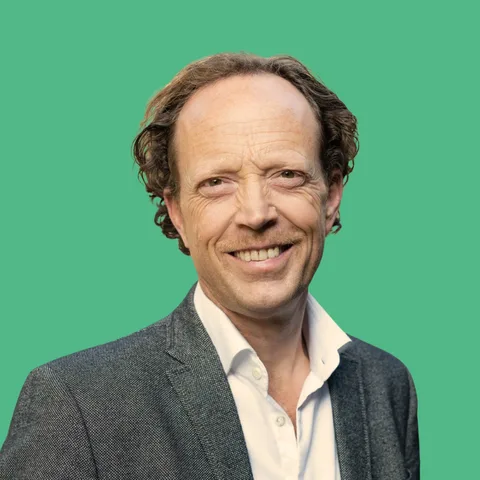
The internet put a world of knowledge one click away, but not the people behind it. I want to help build digital spaces where learners and teachers actually find each other.
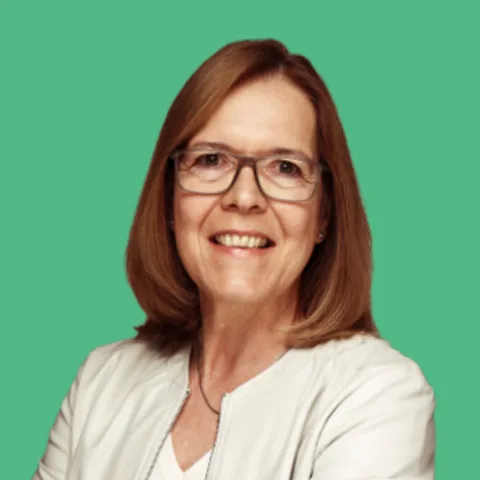
I believe education gets better when more people get to shape it. That is how we get ready for what is coming, and how we make room for the many good ways to be human.
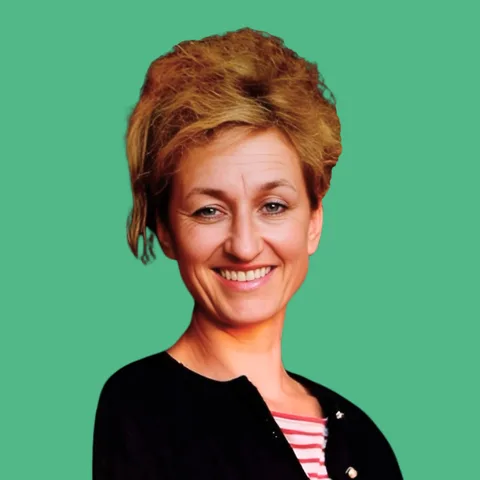
Every person learns differently. I want teaching that is plural enough to reach every kind of mind, not only the ones school was built for.
I'm motivated by making good ideas possible. When the right people and the right resources meet, education work can reach children all over the world.
I want children to know the forest as well as they know the classroom: curious, full of wonder, and the feeling of belonging to the living world.
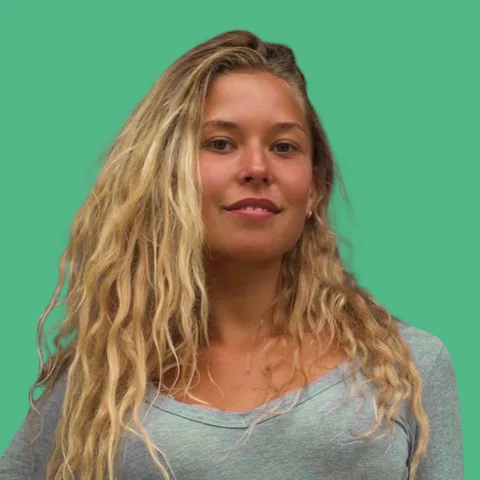
People see before they read. I want ideas about a better future to look as hopeful and inviting as they really are.
So many people are doing brilliant work in education, but they rarely find each other. I want to use technology to bring that work together so knowledge travels further.
Anyone can report content that breaks the Value Compass, and we take it down.
Everything else is free to shape.
No harassment, violence, threats, or abuse;
nothing that harms or exploits young people.
A free, open place where people with knowledge and schools with needs find, contact & book each other. It is for anyone who wants to be active in education, and for every school that wants to open its gates to the world. You can look around without an account. To write a message or book a time, you need a free one.
Explore the mapPlace your school on the map. Then find actors or groups by topic and book a time right in their calendar. Or create a Slot, a time when you need someone, and let actors apply. Either way, the session lands in both calendars. A Slot can also fill an hour when a teacher is out.
Add my schoolCreate a free account and add what you offer: a visit to a school, or an online workshop, module or material. Schools can then find you, and you can apply to their Slots.
Create my profileYes. Create the school account yourself and hand it over to your school leadership later. The school can give each class its own login, including yours.
Together. There is no gatekeeper, and everything here follows the Value Compass. Actors can state that they hold a criminal record certificate, and reviews and a reliability score show how past sessions went. If something breaks the Value Compass, report it and we take it down. You can also report a no-show.
Read the Value CompassUsing EduCollective is free, always. Actors decide their own terms: they can set a price, ask for travel costs to be covered, or take part voluntarily. A school can say what it pays, too. You see all of this before you write, and any payment happens directly between you, outside EduCollective.
Wild means open to any topic: the school brings the subject, you bring what you know. It is for everyone who has no fixed offer but simply wants to help, and for anyone happy to work beyond the topics they listed. Switch on Wild in Explore to include them in your results. Schools can post Wild Needs too, and let whoever comes decide what they bring.
A group of people who create learning activities or materials together, often for their own region. Anyone can start one, open to everyone or invite only. Each group has its own chat and calendar.
Anywhere. EduCollective is borderless: global infrastructure for education, in person and online. It is available in English, German, Spanish, Dutch and Swedish, and more languages are coming, so language is no barrier either. A small team runs it, funded by donations.
Support EduCollectiveStill have a question?
Write to usCreate your free profile in minutes: share what you know, or show what your school needs.
Create my profile →